

Is Amazon Still a Good Investment? What to Know Before Investing in an Amazon Business
Amazon has become one of the largest marketplaces for entrepreneurs looking to build an online business. With millions of customers shopping on the platform, established fulfillment options, advertising tools, and multiple selling models, it continues to attract new business owners and investors.
But is Amazon still a good investment?
The answer depends on the business model, starting capital, product selection, operating costs, competition, and the strategy used to manage the store. Amazon can offer attractive opportunities, but it is not a guaranteed source of passive income. Anyone considering investing in an Amazon business should understand both the potential and the risks before committing capital.
Is Amazon Still a Good Investment?
For the right business model, Amazon can still be a worthwhile investment opportunity. The platform provides access to a large customer base and an established ecommerce infrastructure, allowing sellers to focus on products, branding, marketing, and business growth rather than building an audience from scratch.
However, profitability is not automatic.
An Amazon business requires careful product research, competitive pricing, inventory planning, advertising, customer service, and financial management. The marketplace is also highly competitive, meaning a product that performs well today may face increased competition later.
For investors, the key question should not simply be whether Amazon is profitable. Instead, consider whether a specific Amazon business has healthy margins, sustainable demand, manageable operating costs, and a realistic path to growth.
Why Entrepreneurs Invest in Amazon Businesses
There are several reasons entrepreneurs consider Amazon investment opportunities.
Access to a Large Marketplace
Amazon provides sellers with access to customers who are already actively searching for products. This can reduce some of the challenges associated with building traffic for a completely new ecommerce website.
Multiple Business Models
Amazon does not rely on a single selling model. Entrepreneurs can choose from FBA, FBM, private label, wholesale, and other approaches depending on their resources and goals.
Established Fulfillment Infrastructure
With Amazon FBA, eligible sellers can use Amazon’s fulfillment network for storage, packing, shipping, and certain customer-service and returns functions. This can reduce the operational workload involved in managing orders independently.
Opportunities to Scale
Once a product and business model demonstrate consistent performance, sellers can potentially expand their product range, improve advertising, enter additional marketplaces, or build a stronger brand.
These advantages make Amazon an interesting option, but they should always be evaluated alongside the costs and risks.
Amazon Business Models to Consider
One of the most important decisions when investing in an Amazon business is selecting the right business model.
Amazon FBA
Fulfillment by Amazon allows sellers to send inventory to Amazon fulfillment centers. Amazon then handles many fulfillment activities, making FBA attractive to sellers who want to reduce the operational burden of shipping individual orders.
Amazon FBM
Fulfillment by Merchant means the seller manages fulfillment directly or works with a third-party fulfillment provider. This can provide greater control over inventory and fulfillment but requires stronger operational management.
Amazon Private Label
Private label involves selling products under your own brand. This can provide greater control over branding, product positioning, and customer experience, but it may require substantial investment in product development, inventory, branding, and marketing.
Amazon Wholesale
Wholesale sellers source established products from suppliers or brands and resell them through Amazon. Supplier relationships, product availability, competition, and margins are important factors in this model.
The best model depends on your available capital, experience, risk tolerance, and long-term objectives.
Potential Benefits of Investing in Amazon
The potential benefits of investing in Amazon business opportunities can be significant when the underlying operation is well managed.
Scalable Operations
A well-structured Amazon business can use systems and processes to reduce repetitive work. Inventory monitoring, reporting, order workflows, and other operational activities can be organized to improve efficiency.
Multiple Revenue Opportunities
Sellers can expand beyond a single product by introducing complementary products, entering new categories, or developing a recognizable brand.
Established Customer Demand
Instead of creating an entirely new marketplace, sellers operate within an established ecommerce environment where customers are already searching for products.
Potential for Business Growth
Growth can come from increasing sales of existing products, expanding product lines, improving conversion rates, optimizing advertising, or entering additional marketplaces.
However, these benefits depend on execution. A strong marketplace alone does not make an unprofitable business successful.
What Factors Affect Amazon Business Profitability?
Anyone researching Amazon business profitability should look beyond revenue.
A business generating high sales can still have weak profits if expenses are too high. Important factors include:
- Product sourcing costs
- Amazon selling fees
- Fulfillment expenses
- Advertising spend
- Storage costs
- Returns and refunds
- Software expenses
- Professional management fees
- Taxes and other business expenses
- Product pricing
- Competition
For example, a product may generate significant revenue but have a small profit margin after advertising, fulfillment, product costs, and marketplace fees.
This is why investors should evaluate net profitability and cash flow, rather than judging a business solely by sales figures.
How Much Capital Do You Need?
There is no universal amount required to start an Amazon business.
Costs and capital requirements depend on the business model, product category, inventory requirements, advertising strategy, and level of professional support.
Your initial budget may need to cover:
- Product inventory
- Product samples
- Packaging and branding
- Amazon fees
- Advertising
- Software
- Fulfillment
- Business setup expenses
- Working capital
Working capital is particularly important because money can remain tied up in inventory while products move through the supply chain.
Before investing, create a realistic budget that includes both startup expenses and ongoing operating costs.
Risks of Investing in an Amazon Business
While there are attractive Amazon investment opportunities, investors should also understand the risks.
Competition
Popular products can attract new sellers, leading to price competition and reduced margins.
Inventory Risk
Overestimating demand can leave capital tied up in unsold inventory. Underestimating demand can result in stockouts and lost sales.
Advertising Costs
Paid advertising can be essential for product visibility, but rising competition can increase advertising expenses.
Platform Dependency
An Amazon seller operates within Amazon’s marketplace rules and policies. Changes to fees, policies, account requirements, or marketplace conditions can affect a business.
Product Performance
A product that performs well initially may experience declining demand, negative reviews, increased competition, or other challenges.
For these reasons, investors should avoid treating Amazon as a guaranteed or completely passive investment.
Amazon Automation as an Investment Option
For entrepreneurs who want to reduce the amount of manual operational work, Amazon Automation as an Investment Option can be considered as part of a broader ecommerce strategy.
Amazon automation typically involves using systems, software, structured workflows, and professional management to streamline repetitive activities. Depending on the business, this may include inventory monitoring, order management, product research, listing management, customer support, reporting, and advertising management.
Automation does not eliminate the need for business decisions.
Product selection, financial planning, pricing, brand strategy, and growth decisions still require human oversight. The goal is to make operations more efficient so the business owner can spend more time focusing on strategic decisions.
If working with an Amazon automation company, investors should carefully review the services provided, pricing, reporting, responsibilities, ownership structure, and expected operating costs.
How to Evaluate an Amazon Business Before Investing
Before committing money, evaluate the business from multiple angles.
1. Review Sales History
Look at sales performance over an extended period instead of relying on a short period of strong results.
2. Analyze Profit Margins
Calculate product costs, Amazon fees, fulfillment, advertising, returns, and other expenses to understand the actual profit.
3. Examine Product Demand
Determine whether customers have consistent demand for the product and whether the category is becoming increasingly competitive.
4. Review Inventory
Check inventory levels, turnover, supplier reliability, and the amount of capital tied up in stock.
5. Assess Advertising Performance
Review advertising spend and determine whether paid traffic contributes positively to profitability.
6. Understand Operational Systems
A business that depends entirely on manual processes may require more management time than expected. Organized systems can make future growth easier.
7. Consider Marketplace Risks
Understand Amazon’s policies, account requirements, category restrictions, and other factors that could affect the business.
A thorough evaluation helps investors make decisions based on actual business fundamentals rather than sales claims.
Is Amazon a Good Investment for Beginners?
Amazon can be an opportunity for beginners, but beginners should avoid entering the marketplace without understanding the fundamentals.
Before starting, learn how Amazon selling works, compare business models, understand costs, research products, and create a realistic financial plan.
New entrepreneurs may also choose to work with experienced professionals for specific areas such as product research, store management, PPC, inventory, or fulfillment.
The important point is to remain involved in understanding the business. Professional management can reduce operational work, but business ownership still requires informed decision-making.
Final Thoughts
So, is Amazon still a good investment? It can be, but the opportunity depends heavily on the quality of the business behind the investment.
A successful Amazon business requires more than access to the marketplace. Product selection, margins, inventory management, advertising, customer experience, and operational efficiency all influence long-term performance.
For entrepreneurs considering Amazon investment opportunities, the best approach is to evaluate the numbers, understand the risks, choose a suitable business model, and create systems that support sustainable growth.
Amazon automation can also help reduce repetitive operational work when implemented properly. Rather than viewing automation as a shortcut to guaranteed profits, investors should treat it as a way to build more organized, scalable business operations.
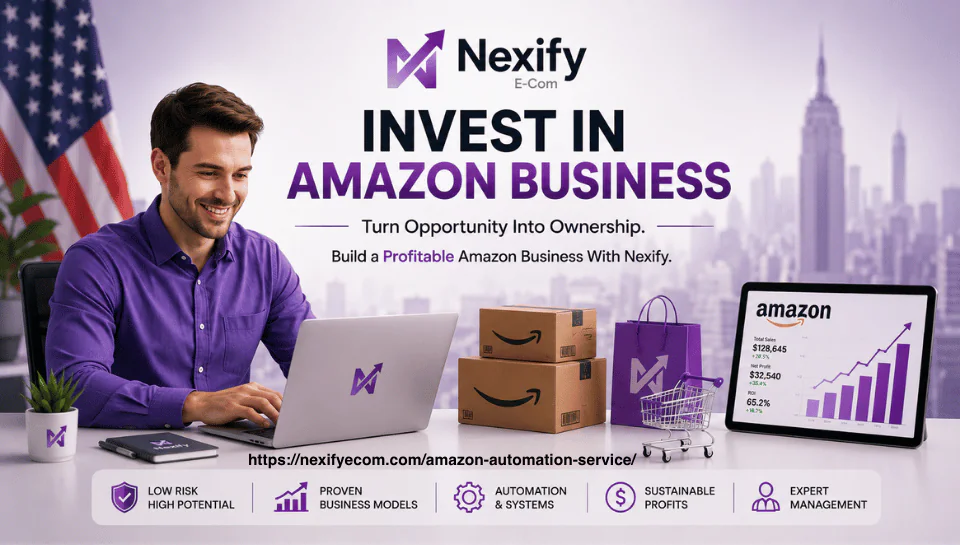
If you’re exploring Amazon as a business opportunity, start by understanding the fundamentals and evaluating whether the model fits your goals, budget, and level of involvement. For a deeper overview, explore Nexify Ecom’s Complete Amazon Automation Guide to learn more about Amazon business models, automation, management, and scaling strategies.
Ready to Build Your Amazon Business?
Get expert support with Nexify Ecom’s Amazon Automation Services and streamline your store with professional management and proven systems.
Explore Amazon Automation Services